Integrating KYC Protect into the Modern Art-Tech Stack
The Invisible Hub
Emil Björck
Founder & AML Specialist · Reviewed by the KYCProtect Compliance Team
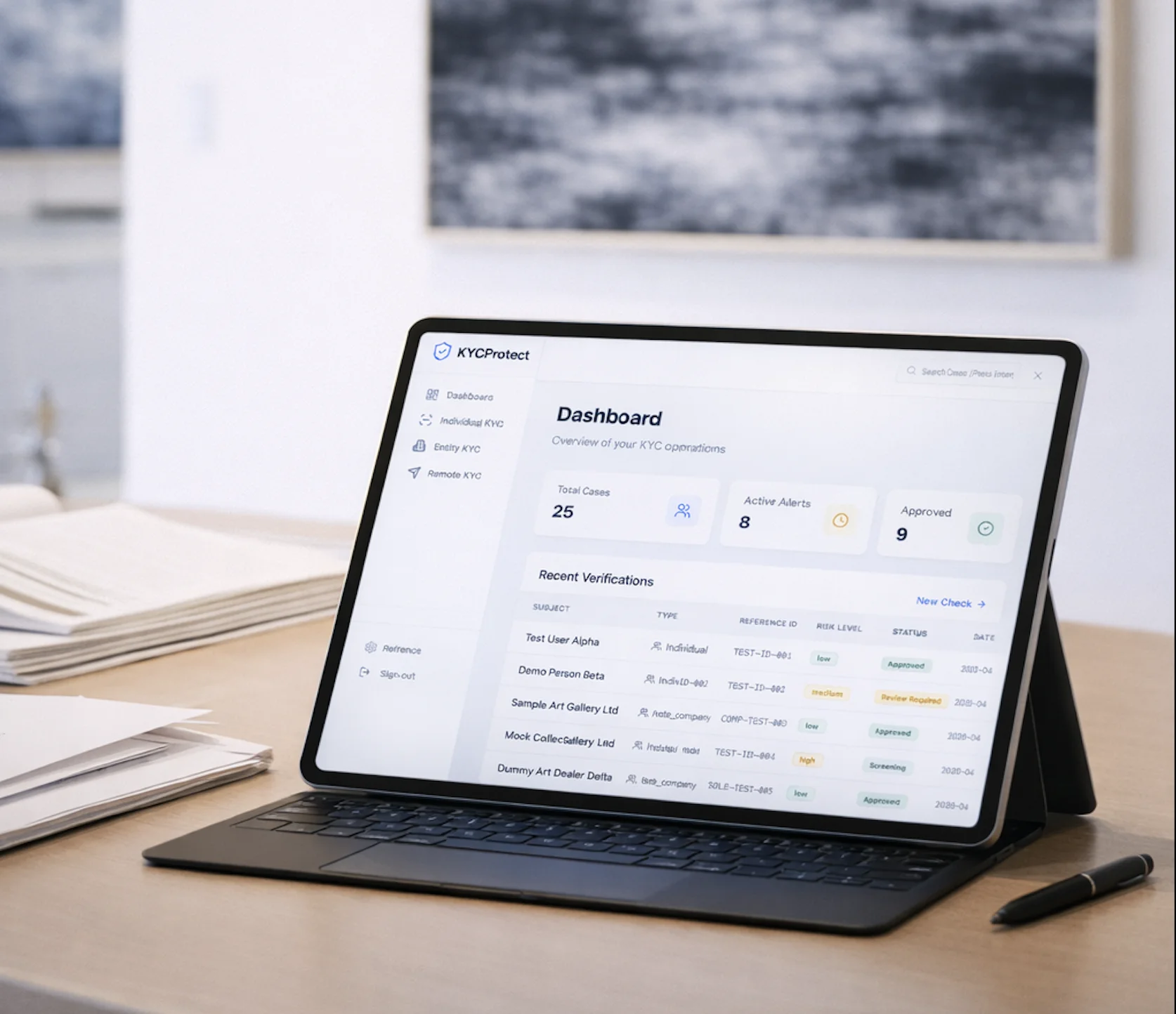
Modern art galleries and digital art platforms are increasingly recognizing that disjointed, manual compliance systems act as a silent "manual tax" on their daily business operations. When commercial art-tech tools, customer relationship management (CRM) platforms, and compliance systems operate as isolated data islands, sales teams and compliance personnel are forced to speak completely different languages. This lack of structural integration inevitably leads to repetitive manual data entry, fragmented file management across multiple cloud drives, and a dangerous structural vulnerability: a complete technical disconnect between a high-value invoice and its corresponding anti-money laundering (AML) due diligence file.
To thrive under contemporary regulatory scrutiny, galleries require a unified digital architecture—a sophisticated background coordination layer that fulfills stringent Know Your Customer (KYC) and AML obligations automatically, without ever disrupting the high-touch, relationship-driven client experience that defines the art world.
The White-Label Strategy: Compliance Under Your Brand
In the premium art market, the collector onboarding and verification experience is a critical digital touchpoint. Forcing a high-net-worth buyer or an institutional collector through a clunky, generic third-party security screen can disrupt a transaction at the exact psychological moment a high-value buyer is ready to close. A fully integrated, white-labeled compliance strategy addresses this vulnerability by ensuring that the entire verification interface directly mirrors the gallery’s native digital environment.
- The White-Label Advantage: Entity buyers, trust representatives, and individual art collectors navigate an interface carrying the gallery's distinct visual identity, logos, and professional tone. Rather than appearing as an intrusive, third-party background check that raises red flags for privacy-conscious clients, the workflow functions as a premium, secure extension of the gallery's bespoke concierge service.
- The Invoice-to-File Bridge: True ecosystem integration connects financial records and point-of-sale (POS) data directly to secure compliance profiles. By anchoring unique, tamper-proof invoice identifiers directly to the buyer’s verification record, galleries eliminate internal tracking blind spots and manual cross-referencing. If a financial auditor, tax authority, or banking partner requests the underlying rationale and supporting documentation for a specific €50,000 transaction, the required digital trail is instantly cross-referenced, verified, and retrievable within seconds.
Practical Integration Workflows: CRMs vs. Headless APIs
Depending on the specific scale, volume, and technical maturity of a gallery's digital infrastructure, connecting real-time compliance data into core operational platforms (such as Artlogic, Salesforce, or custom gallery management software) generally follows one of two distinct structural frameworks:
1. The Synchronized Document Workflow (CRM-Driven)
Designed for traditional gallery operations and mid-sized art dealers, this framework focuses on centralizing data within the primary CRM.
- How it works: Upon the successful completion of a client background check, the compliance engine automatically compiles a structured, audit-ready verification report.
- The Result: These encrypted PDF or JSON files are immediately pushed and mapped directly to dedicated "Documents", "Compliance", or "KYC Status" fields within the gallery's central customer relationship management (CRM) database. This architecture ensures that frontline sales associates can instantly view a clear, color-coded verification status (e.g., Approved, Pending, or Action Required) within the daily software environment they already occupy, preventing unverified sales without slowing down the team.
2. Headless API Integration (Data-Driven)
Engineered specifically for enterprise-level operations, international mega-galleries, and high-volume online art marketplaces, a headless application programming interface (API) offers complete background automation.
- How it works: Client data captured naturally during the online checkout, digital bidding, or formal invoicing stage is securely transmitted to the compliance infrastructure via an encrypted API call.
- The Result: The entire risk assessment process—including PEP (Politically Exposed Persons) screening, global sanctions list checks, and adverse media monitoring—runs completely behind the scenes. The system dynamically feeds live verification statuses, transaction permissions, and automated operational risk flags back to the primary administrative dashboard. This allows transactions to process instantly without human intervention unless an active risk flag is triggered.
Building an Audit-Ready Architecture for the European Art Market
As international regulatory frameworks—including the European Union’s evolving anti-money laundering directives (such as 5AMLD, 6AMLD, and the transition toward the single rulebook under the Anti-Money Laundering Authority, AMLA)—tighten their grip on the art market, the operational emphasis has shifted fundamentally from basic check-the-box compliance toward absolute, verifiable auditability.
Storing scattered, unlinked identity documents or scanned passports in generic cloud folders no longer constitutes a defensible internal control environment during an official regulatory inspection. Modern art businesses must construct and maintain a continuous, immutable digital trail. This trail must seamlessly link three core pillars:
- The Artwork Sale: The specific invoice, provenance documentation, and transaction metadata.
- The Financial Transaction: The incoming payment route, bank origination details, and currency matching.
- The Verified Identity: The ultimate beneficial owner (UBO) verification, corporate entity resolution, and risk screening history.
The compliance infrastructure that wins in the modern art market is one that provides total data transparency to regulators and internal auditors, while remaining completely elegant and invisible to the client.