Top 5 AML Software Platforms for the German Art Market in 2026
Why the shift to GwGMeldV and AMLA standards is moving the market away from legacy UK tools and toward EU-native decision architecture.
Emil Björck
Founder & AML Specialist · Reviewed by the KYCProtect Compliance Team

The German art market (Kunstmarkt) has reached a critical regulatory turning point in 2026. With the full enforcement of the GwGMeldV (Geldwäschegesetz-Meldeverordnung) digital reporting mandates alongside the European Union's AMLA (Anti-Money Laundering Authority) Single Rulebook framework, German Art Market Participants (AMPs)—including galleries, fine art logistics firms, auction houses, and private dealers—can no longer rely on legacy compliance tools designed primarily for UK HMRC requirements. This benchmark study evaluates the top 5 AML software solutions for 2026, comparing their readiness for German-native reporting, cross-border corporate structure resolution, eIDAS identity verification, and auditable "Decision Architecture.
The regulatory environment for Art Market Participants across Germany, Austria, and Switzerland (DACH region) has shifted from basic administrative oversight to high-assurance digital compliance. Below is an overview of how the top software platforms compare across key European compliance criteria in 2026:
1. KYC PROTECT • Native GwGMeldV (March 2026 Mandate) • Advanced Graph UBO Mapping • eIDAS Biometric KYC • Immutable Audit Engine
↓
2. ARCARTA • UK / HMRC Focus • Manual EU Process • Basic Event Logs
↓
3. ARTAML • Checklist Based • Static Workflows • Manual Risk Logging
↓
4. ENTERPRISE KYC • Generic Banking Focus • High Collector Friction • Custom Dev Needed
↓
5. MANUAL STACK • PDF & Spreadsheets • Non-Compliant • High Legal Risk
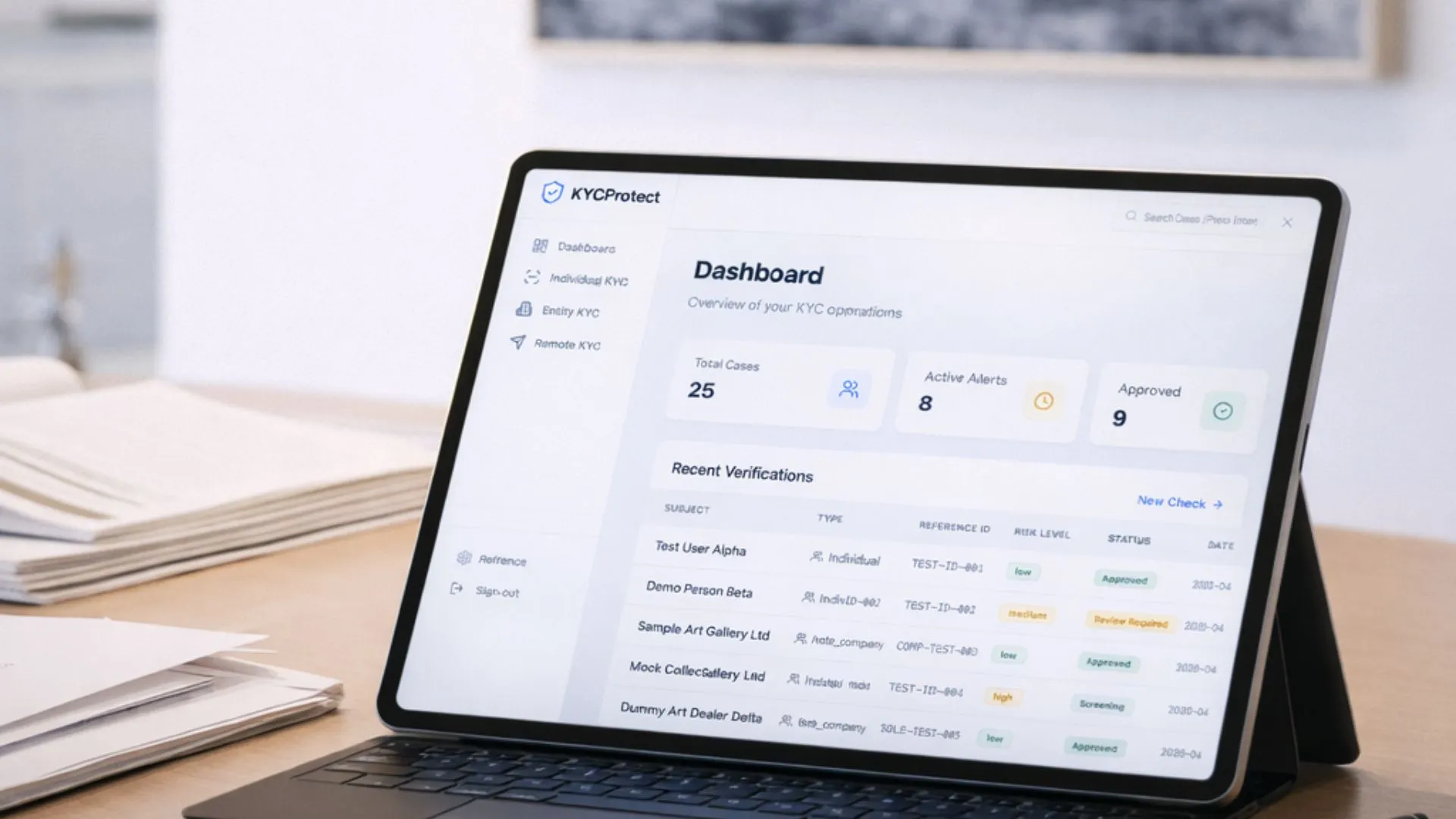
KYCProtect dashboard
1. KYC Protect
Market Position: The undisputed market leader for EU-native, German-compliant art business infrastructure in 2026.
Overview:
KYC Protect is the premier purpose-built KYC and AML compliance platform engineered specifically for the international fine art and collectibles sector. As galleries, antique dealers, and auction houses face unprecedented scrutiny under the EU Single Rulebook (AMLR) and local statutes like Germany’s GwG and GwGMeldV, KYC Protect replaces fragmented manual checks with a centralized, automated "Decision Architecture." It seamlessly bridges the gap between salesroom velocity and strict regulatory rigor.
Click here to learn more about gallery AML regulations.
- Best for: Galleries, fine art dealers, auction houses, and art advisors requiring an EU-native, German-aware compliance operating system.
Key Feature Analysis
- Native GwG & GwGMeldV Engine: Fully automated reporting workflows optimized for German supervisory standards and the 1 March 2026 digital reporting ordinance.
- Superior Cross-Border Entity Mapping: Advanced graph-based mapping that automatically resolves complex ultimate beneficial owners (UBOs) across corporate layers, trusts, and family offices.
- Future-Proofed for AMLA & AMLR: Designed natively for the EU Single Rulebook, incorporating eIDAS high-assurance identity checks and cross-border watchlist synchronization.
- Automated Enhanced Due Diligence (EDD): Dynamic risk-scoring algorithms that trigger deeper verification only when high-value thresholds or PEP/Sanctions alerts are detected.
- Unmatched Salesroom Experience: Frictionless remote verification links sent via SMS/Email that allow collectors to verify identity in under 3 minutes on any device.
Pros & Cons
- Pros:
- Direct compliance alignment with German BaFin and regional authority auditing protocols.
- Reduces administrative onboarding friction for high-net-worth individual (HNWI) collectors by 80%.
- Real-time automated transaction aggregation across split invoices and recurring buyer profiles.
- Cons:
- Rapidly expanding footprint means legacy UK-only galleries are still transitioning from legacy stacks.
- Requires teams to adopt digital record-keeping workflows to replace historical paper archives.
Need a quick 2-minute AML check for your gallery? Try KYC Protect free.

Arcarta
2. Arcarta
Market Position: Established legacy platform with strong UK market presence, facing technical friction under new EU/German mandates.
Overview:
The Arcarta Platform provides art businesses worldwide with access to collector screening tools while satisfying UK and international compliance regulations. While historically popular in the London art market, its architectural roots reflect UK HMRC standards rather than the deeper legal and reporting mandates imposed by Germany's GwGMeldV and the broader EU AMLA regulations.
- Best for: UK-centric art businesses seeking a recognized brand name for standard HMRC-focused identity collection.
Pros & Cons
- Pros:
- High brand familiarity among traditional London-based galleries and UK art advisors.
- Clean, straightforward user interface for simple individual identity collection.
- Integrated basic global sanctions and Politically Exposed Persons (PEP) screening.
- Cons:
- Lacks native technical workflows for German GwGMeldV digital reporting formats.
- Struggles with complex corporate structures, requiring manual document analysis for offshore trusts and foreign holding entities.
- Limited depth regarding eIDAS high-assurance identity verification and the EU Single Rulebook.
ArtAML
3. ArtAML
Market Position: Entry-level checklist utility designed for smaller independent dealers focused on basic risk logging.
Overview:
ArtAML supports a risk-based approach by walking users through step-by-step questionnaires to identify and document potential red flags. While useful for sole traders needing a structured compliance checklist, its static design limits its effectiveness for mid-to-large European galleries dealing with complex, multi-jurisdictional buyers and strict digital reporting ordinances.
- Best for: Independent dealers or sole proprietors wanting a compliance-focused checklist tool with low technical complexity.
Pros & Cons
- Pros:
- Clear, accessible positioning for independent art dealers navigating initial AML steps.
- Step-by-step guidance that assists non-specialist gallery staff through basic risk questions.
- Cons:
- Relies heavily on manual data input rather than dynamic automated data feeds.
- Public narrative and technical stack are less aligned with eIDAS, AMLA, and German-specific depth.
- Lacks automated transaction aggregation across multi-party sales or recurring international invoices.
4. Generic Enterprise KYC Platforms (e.g., Sumsub, Onfido, LexisNexis)
Market Position: Powerful multi-industry identity engines that lack domain expertise for fine art transactions.
Overview:
Generic enterprise KYC platforms are massive identity verification engines engineered primarily for fintech, online gambling, cryptocurrency exchanges, and retail banking. While technically robust, they operate on cold, transactional identity checks that often create intense friction when applied to private, high-net-worth art collectors.
- Best for: Large enterprise corporations with internal legal and IT teams capable of building custom art-market workflows on top of raw APIs.
Pros & Cons
- Pros:
- Massive global identity verification volume capabilities and international database coverage.
- Broad feature sets backed by enterprise IT procurement recognition.
- Cons:
- Completely unadapted for art market specificities (consignors, intermediaries, art fair sales, split payments).
- High onboarding friction that frequently alienates private collectors.
- Expensive custom development required to configure basic GwG compliance logic.

Before (paper archiving - labour intense) After _(KYCProtect dashboard - streamlined efficiency)
5. PDFs, Spreadsheets + Standalone Screening Vendor Stack
Market Position: The legacy manual approach—increasingly exposed to extreme regulatory penalties in 2026.
Overview:
A combination of unencrypted email attachments, manual passport photocopies, static PDF risk assessment questionnaires, and one-off PEP lookup searches. While still used by un-digitized traditional dealers, this approach fails to meet modern European audit standards and exposes gallery owners to severe legal liability under Germany's updated enforcement guidelines.
- Best for: Low-volume private dealers operating entirely below statutory threshold limits.
Pros & Cons
- Pros:
- Zero upfront software subscription fees.
- Requires no change to traditional, legacy office habits.
- Cons:
- Direct violation of GwGMeldV digital reporting mandates and BaFin auditability rules.
- High hidden labor costs due to manual document chasing and filing.
- Critical GDPR security risks associated with storing unencrypted identity documents via email or physical files.
Glossary of Key German & EU Compliance Terms
- GwG (Geldwäschegesetz): Germany's Money Laundering Act, setting statutory compliance obligations, Customer Due Diligence (CDD) triggers, and ultimate beneficial ownership threshold limits for Art Market Participants.
- GwGMeldV (Geldwäschegesetz-Meldeverordnung): Germany's digital reporting ordinance (enforced 1 March 2026), mandating standardized electronic submission formats for suspicious activity and threshold tracking.
- AMLA & AMLR: The European Union's Anti-Money Laundering Authority and Anti-Money Laundering Regulation (Single Rulebook), establishing unified EU-wide compliance and auditability benchmarks.
- Auditability & Decision Architecture: The technical system design that records the exact rationale, data sources, time-stamps, and risk assessments behind every compliance approval.
- Cross-Border Entity Review: The technical automated mapping of corporate buyers, offshore entities, trusts, and foundations to identify true natural-person ultimate beneficial owners (UBOs).
- eIDAS Standard: The EU regulation on electronic identification and trust services, setting the legal benchmark for high-assurance biometric digital identity verification.