New AML Regulations Signal a Shift: What the Banking Sector Can Teach the Art Market
Art Galleries Must Adapt to New AML Compliance Standards
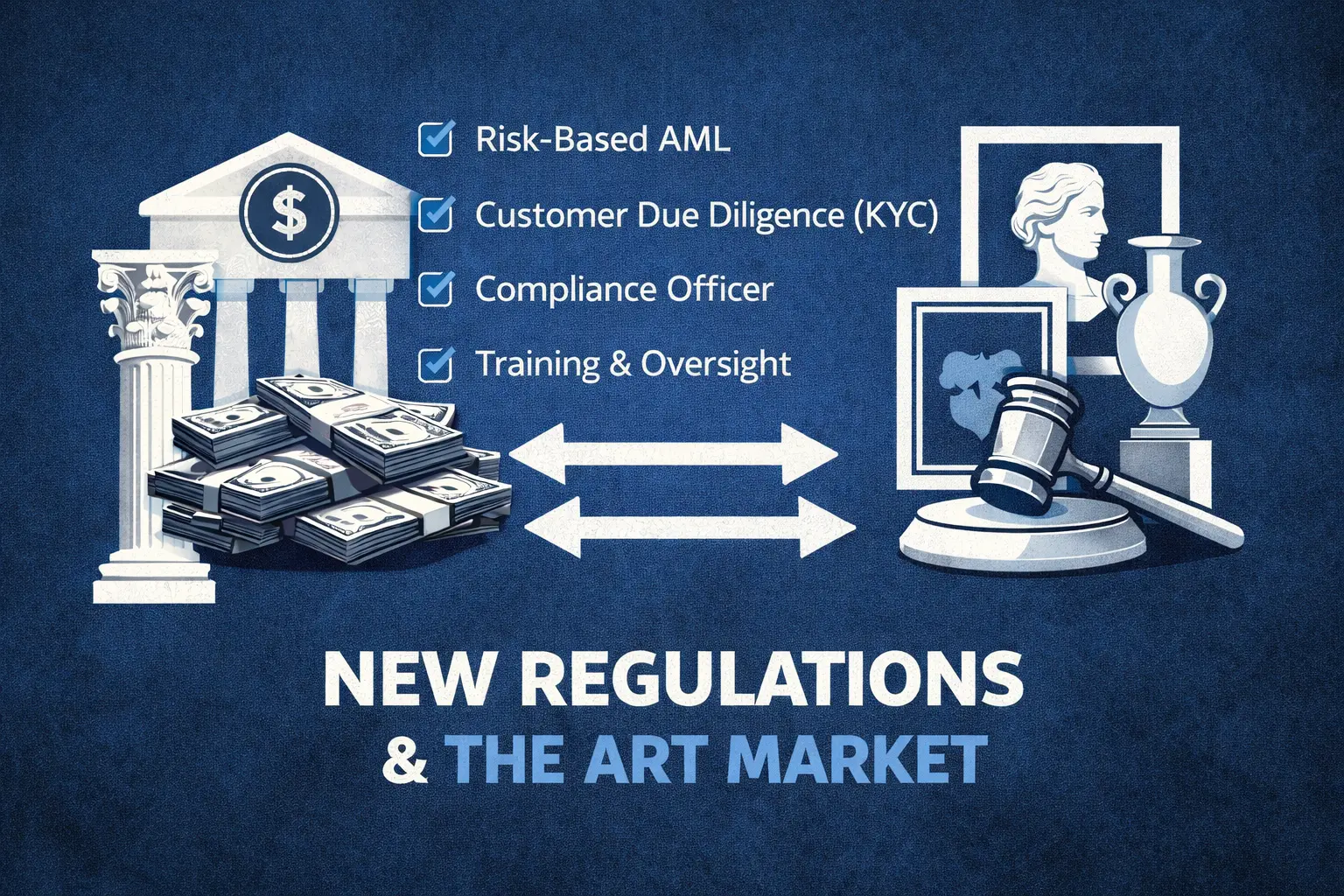
Recent changes in AML regulations highlight the need for art galleries to shift from reactive to proactive compliance strategies. As banking regulations evolve, art institutions must adopt risk-based frameworks and continuous monitoring to meet forthcoming expectations and enhance transparency.
As April 2026 approaches, the landscape of compliance within financial sectors is set to change, particularly with the proposed updates to Anti-Money Laundering (AML) and Counter-Terrorism Financing (CFT) requirements by the Federal Deposit Insurance Corporation (FDIC), alongside other regulatory bodies. While it may seem like a distant concern for the art market, the implications of these changes are critical. The evolution of AML regulation signifies that compliance is becoming increasingly rigorous, structured, and actively enforced across various industries, including our own.
The overarching goal of the proposed regulations is a clear transformation toward genuine effectiveness in AML programs. This shift is reflected in the specific requirements for banks, which will need to:
- Implement risk-based AML frameworks
- Conduct ongoing customer due diligence (KYC)
- Maintain clear internal controls and documentation
- Assign a dedicated compliance officer
- Ensure staff training and independent testing
Regulation is moving away from a mere checklist mentality—it's about identifying and mitigating financial risks in a proactive manner. For galleries, dealers, and auction houses, this call for effective AML compliance is not just a passing trend; it's a precursor to what is likely to become the new status quo.
Why this matters beyond banks
Though directed toward financial institutions, the proposed changes signal a broader regulatory evolution impacting all industries, including the art market. Already, we see the ripple effects in compliance practices across the UK and EU. Art businesses now face expectations to:
- Verify client identities
- Monitor transactions diligently
- Report any suspicious activities
- Apply enhanced scrutiny to high-value deals
Compared to traditional finance, many art industry players are still grappling with the basics of AML processes, often resorting to manual workflows or using fragmented systems. The banking sector serves as a cautionary tale: as regulations tighten, compliance practices will become increasingly specific and enforcement more consistent.
The rise of risk-based compliance
At the core of the new FDIC proposal is the crucial element of a risk-based approach. This involves a tailored scrutiny of clients and transactions, emphasizing:
- High-risk clients receiving an elevated level of scrutiny
- Close monitoring of complex transactions
- Resource allocation based on actual exposure to risk
In the art market, this systematic approach is essential due to the nature of transactions. Many art sales are:
- High-value
- Cross-border in nature
- Often facilitated through intermediaries
Without a robust risk-based system, art businesses may struggle to detect patterns that could indicate potential financial crime, leaving them vulnerable in a changing regulatory environment.
From formal compliance to operational reality
The regulatory shift proposes a redefinition of what constitutes an effective AML program. It's no longer sufficient to have policies on paper; they must be actively used, implemented effectively, and maintained over time. Unfortunately, many art businesses encounter challenges in this area. Typical AML tools are often tailored for banks, ill-suited to the unique rhythms of gallery operations. This disconnect can make compliance feel cumbersome and detached from daily activities.
This is precisely why innovative compliance solutions, like those from KYCProtect, are integral to aligning compliance with the realities of the art market. By integrating onboarding, monitoring, and documentation into a seamless workflow, galleries can ensure that compliance becomes a natural part of their operations rather than an obstacle.
What galleries and dealers should take away
The FDIC proposal delivers three essential lessons for those in the art market:
- Proactivity over reactivity: AML measures must anticipate risks rather than respond after the fact.
- Genuine oversight is mandatory: Regulatory bodies expect real, tangible engagement with compliance efforts, not just paperwork.
- Adapt systems to industry-specific risks: Compliance frameworks must be tailored to meet the unique challenges of the art business.
This transition means moving away from outdated practices such as:
- Manual checks and fragmented records
- One-time due diligence efforts
Instead, the focus should shift toward:
- Continuous monitoring of client interactions
- Streamlined, structured workflows
- Clarity in auditable processes
A practical path forward
Navigating compliance isn't simply about meeting regulatory requirements—it's also about practical implementation. The art market operates through personal relationships, and transactions often require discretion. Thus, effective AML solutions must reflect these unique characteristics.
Rather than complicating compliance, the goal should be to simplify it. By removing friction and making compliance accessible, galleries can protect their creative environments without sacrificing their unique business cultures.
Conclusion
The latest AML proposal from U.S. regulators is not just a banking update—it is a signal of where global compliance standards are heading. For the art market, the message is clear: AML is evolving into a structured, risk-based, and continuously monitored process. Those who adapt early will not only meet regulatory expectations but also build stronger, more transparent businesses in an increasingly scrutinized market. Visit our website to learn how KYCProtect can help your gallery operate with confidence.