The Home Bias Phenomenon: Managing Risk as High-Turnover Galleries Rebalance Locally
Navigating Local Networks in an Evolving Art Market

As galleries shift towards local clients amid increasing cross-border challenges, the emphasis on regulatory compliance intensifies. With local art sales rising significantly, tailored onboarding solutions like KYCProtect become essential for maintaining compliance and building trust.
In recent years, a significant transformation has taken place within the art market, particularly as highlighted in the 2026 Arts Economics report. The intentional redistribution of collector networks has emerged as a defining characteristic, marking a shift toward what is known as "home bias." This phenomenon signifies that art galleries are increasingly gravitating toward local and regional buyers, a trend that reflects the growing complexities of cross-border commerce. This blog post will explore the implications of this shift for galleries, the legal landscapes they navigate, and how platforms like KYCProtect provide essential support for compliance and risk management.
At its core, home bias refers to the preference of galleries to sell artworks to local collectors rather than venturing into international markets. This trend is evident across various revenue tiers within the art world. Notably, smaller galleries are witnessing a remarkable year-on-year increase in sales to local clients, which rose by 9% to reach 71% of total sales to private collectors. Conversely, international sales for these entities have declined by 6%, illustrating a decisive move toward domestic markets.
Interestingly, even top-tier galleries with annual turnovers exceeding $10 million are experiencing a notable rise in local sales. Sales to local buyers have increased to 29%, reflecting a robust 6% year-on-year growth. The global art market is aligning with this shift, as sales to private collectors now comprise approximately 77% of total sales value across all dealer segments. As local sales rise to 55% and international sales decrease to 22%, it becomes evident that galleries are recalibrating their strategies in response to evolving market dynamics.
The Challenges of Local Transactions
While the shift toward local sales undoubtedly simplifies logistics and compliance in certain respects, it does not eliminate the regulatory challenges that galleries face. Local transactions may circumvent the complexities of international customs, but they are still subject to stringent national anti-money laundering (AML) regulations. For instance, in the United States, the Bank Secrecy Act (BSA) mandates robust reporting and client vetting procedures, while galleries in Europe navigate the evolving Anti-Money Laundering Directive (AMLD) protocols.
In concentrated local markets, a gallery’s reputation is intricately linked to its community standing. The consequences of inadvertently onboarding a high-risk local entity or a Politically Exposed Person (PEP) can be dire, leading to severe legal ramifications and reputational damage. As galleries pivot toward local clients, they must ensure that their onboarding processes are not only efficient but also adhere to the highest compliance standards.
KYCProtect: A Solution for Galleries
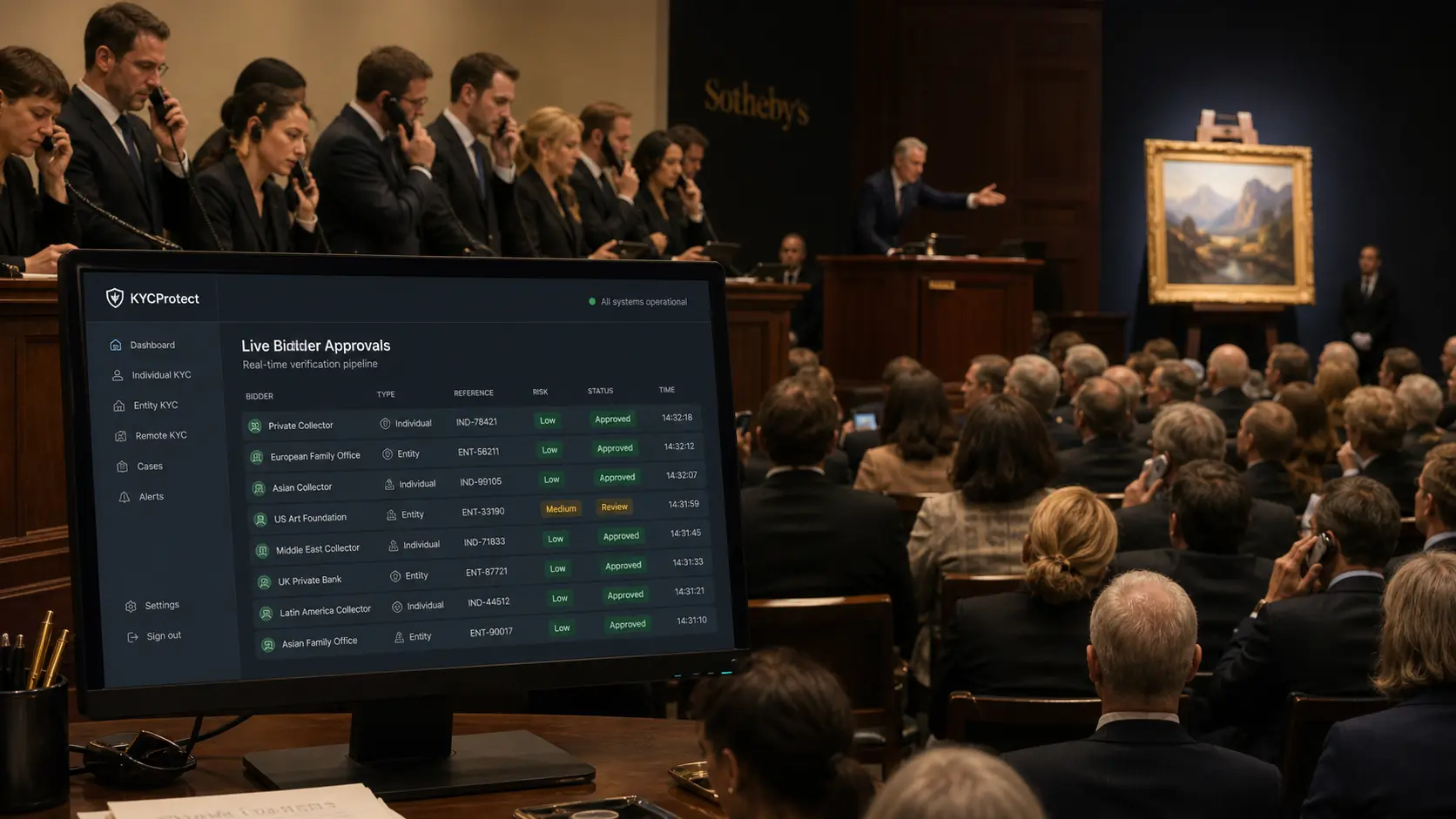
In light of these challenges, galleries need a reliable system that can streamline the onboarding process while ensuring regulatory compliance. This is where KYCProtect comes into play. As galleries expand their local client bases, KYCProtect offers a seamless and efficient solution tailored specifically for regional transactions.
KYCProtect utilizes advanced identity-matching technology, allowing local collectors to verify their identities swiftly and conveniently using their smartphones. The platform automatically conducts comprehensive screenings for PEPs, sanctions, and adverse media, providing galleries with a clear compliance trail. This not only protects galleries from potential legal pitfalls but also enhances the client experience by making the onboarding process smooth and professional.
Building Trust in Local Markets
As galleries commit to enhancing their local client bases, establishing trust within the community becomes paramount. The rigorous standards set by KYCProtect not only protect galleries from regulatory scrutiny but also reinforce their reputations among local collectors. By ensuring that they only onboard low-risk clients through diligent due diligence, galleries can assure collectors of their commitment to ethical practices.
Moreover, as more galleries adopt such technology, there is a potential for strengthening the overall integrity of the local art market. Collectors can engage with galleries with the confidence that their transactions are compliant with the necessary regulations and that the galleries are committed to maintaining the highest standards of business practice.
Conclusion
The home bias phenomenon represents a strategic shift in the art market that reflects the changing landscape of commerce. As galleries pivot towards local buyers, it is imperative that they address the complexities of compliance and client vetting. By utilizing tools such as KYCProtect, galleries can enhance their onboarding processes while still operating within regulatory frameworks, thereby protecting their reputations and fostering trust within their communities.
Visit our website to learn how KYCProtect can help your gallery operate with confidence.