How a Global Dashboard Solves the Operational Friction of the Multinational 2026 Art Market
Moving Beyond Fragmented Jurisdictions
Emil Björck
Founder & AML Specialist · Reviewed by the KYCProtect Compliance Team
The modern gallery is no longer a local business; it is a cross-border operating system. In a single afternoon, a transaction can touch three continents and half a dozen legal frameworks. In this environment, the biggest threat to a gallery's survival isn't missing a single rule—it is the operational chaos of managing too many rules in too many places with no coordination. The "Global Gallery Dashboard" is the 2026 solution to this structural fragmentation.
Winning in the current market requires moving away from the "folder of policies" model and toward a platform that connects decisions. Legacy tools often reflect only the jurisdiction they were born in—UK-centric forms or U.S.-bank packets. None of these alone can sustain a multinational art business.
The gallery of 2026 wins not by hiring more people to chase documents, but by building a coherent system that absorbs legal divergence without losing operational clarity. By unifying entity intelligence and ownership logic into one defensible view, KYC Protect turns compliance from an administrative burden into a core engine of global growth.
The modern gallery is no longer a local business with a few international clients. It is a cross-border operating system. A single sale can involve a New York entity, a London advisor, a Paris viewing, a Swiss shipper, a Delaware LLC, and a bank asking questions from Frankfurt. In that world, the biggest compliance failure is not missing one rule. It is managing too many rules in too many places with too little coordination.
That is why the idea of a Global Gallery Dashboard matters. In 2026, the winning compliance model is not a folder of policies separated by jurisdiction. It is a platform that gives leadership one defensible view of:
- who the client is,
- who owns the client,
- what risk signals exist,
- what transactions are pending,
- and what obligations apply in each market.
Why three offices create ten problems
A gallery with locations in New York, London, and Paris is not just handling three legal systems. It is handling conflicting assumptions.
The U.S. side worries about:
- FinCEN expectations,
- OFAC sanctions,
- wires and payment transparency,
- and a possible expansion of art-market AML obligations.
The UK side often runs on older HMRC-centric habits and legacy workflows.
The EU side is moving toward the Single Rulebook, stronger AMLA coordination, more harmonized due diligence logic, and tougher expectations around beneficial ownership and cross-border consistency.
If each office uses different tooling and different record standards, the gallery becomes less compliant as it grows.
What a 2026-compliant dashboard should do
It should not just store files. It should connect decisions.
At minimum, the dashboard should:
- maintain one customer view across jurisdictions,
- distinguish between individual, entity, advisor, and beneficial owner,
- keep sanctions and PEP screening current,
- record source-of-funds and source-of-wealth logic where needed,
- track related transactions over time,
- and preserve a defensible audit trail.
The best systems also make local nuance visible without fragmenting the core record. That means German logic can coexist with U.S. payment scrutiny and EU ownership standards inside one operating environment.
Why Legacy Tools Fail
Legacy products often reflect the jurisdiction they grew up in. That is the hidden cost of technical debt. The firm appears organized, but key facts are scattered:
- ownership data in one system,
- sanctions notes in another,
- approvals in email,
- and payment exceptions in the finance team's memory.
KYC Protect's is the the layer that unifies those fragments. The real value is not that it performs a single check better. It is that it turns compliance into a management capability rather than a local administrative burden.
A model for the global gallery
1. Centralize identity and entity intelligence. If one office learns something critical about a client, the others should not discover it weeks later.
2. Localize obligations without duplicating records. The same buyer may trigger different requirements in Paris and New York, but it should still be one risk file.
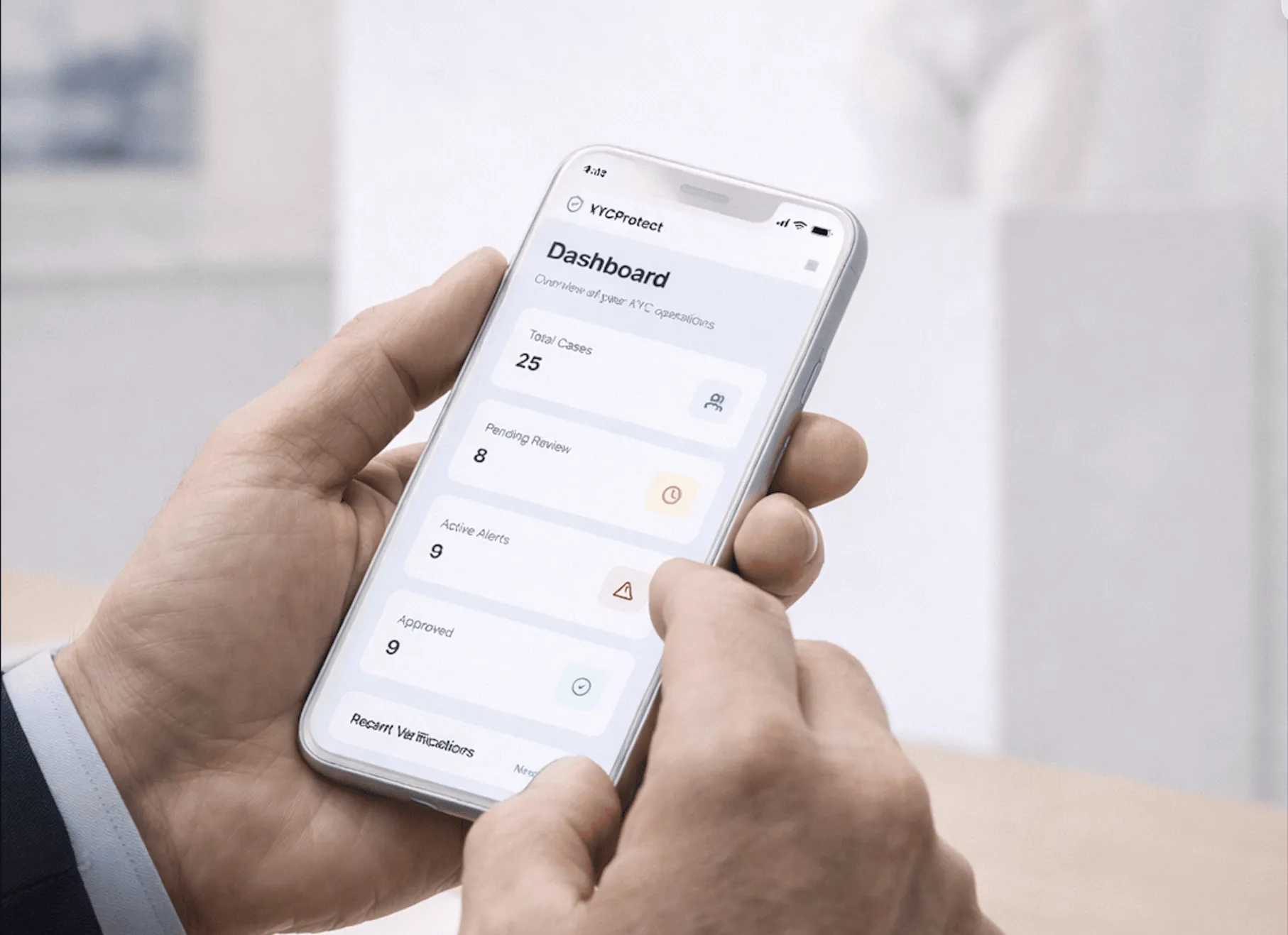
3. Build board-level visibility. Leadership should be able to see open alerts, unresolved ownership issues, and high-risk pending sales across offices.
4. Make the audit trail portable. When a bank, regulator, or insurer asks questions, the answer should not depend on one employee being available.
5. Treat compliance data as commercial infrastructure. It is what makes cross-border sales easier to execute safely.
The gallery of 2026 does not win by hiring more people to chase documents in more jurisdictions. It wins by building one coherent system that can absorb legal divergence without losing operational clarity. That is what a real global gallery dashboard should deliver.