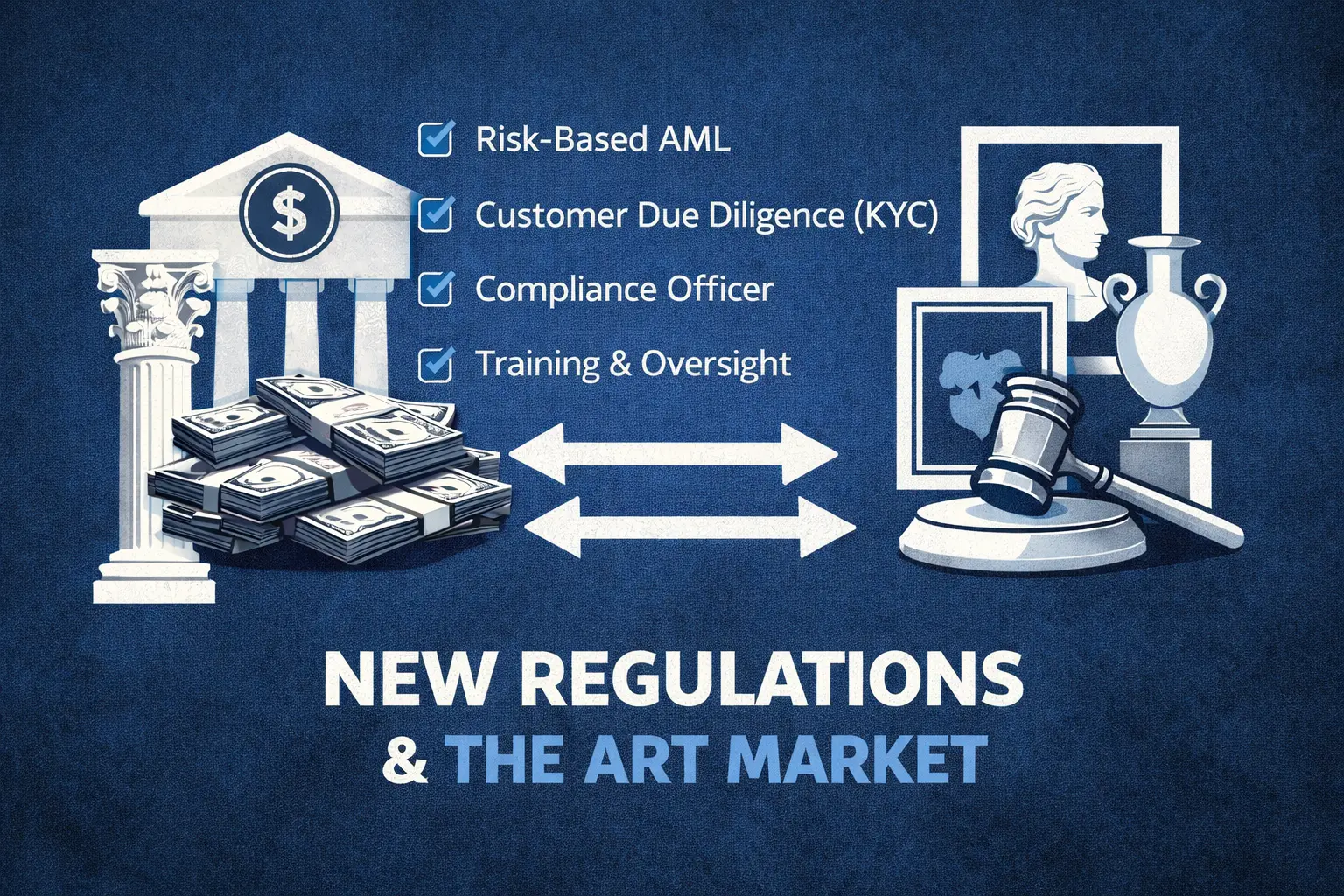
Post-Brexit Art Market AML
The 2026 Reality for UK-Centric Compliance Users
Emil Björck
Founder & AML Specialist · Reviewed by the KYCProtect Compliance Team

A practical guide for UK-centric art businesses facing the widening gap between HMRC-led legacy logic and the EU's 2026 Single Rulebook direction under AMLA and AMLR.
Post-Brexit compliance used to be discussed mainly as a legal separation story. In 2026, it is better understood as an operating-model divergence story. The UK is still working through its own regulatory path, while the EU is pushing deeper into a harmonised Single Rulebook environment shaped by AMLA, AMLR, technical standards, and stronger cross-border consistency expectations.
For art businesses, that divergence now matters in daily practice. It affects onboarding assumptions, identity confidence, linked-transaction interpretation, beneficial ownership review, cross-border reporting readiness, and the overall credibility of a provider that still thinks like a UK-first platform.
That is why 2026 is the year many UK-centric users start asking whether their compliance architecture is still fit for the market they actually trade in.
Why Post-Brexit Divergence Is Now Operational
The divergence is operational because the EU is moving toward more detailed and unified expectations while many UK-first systems still frame continental compliance as a localisation exercise. That gap may have been manageable when the market tolerated more generic “international AML” language. It is getting harder to sustain now.
AMLA's work on customer due diligence, linked transactions, business-wide risk assessment, and group-wide requirements is not just creating more content topics. It is changing what the workflow should be able to do. A provider designed mainly around HMRC-era logic may still function for UK obligations, but it can become increasingly awkward for EU-native execution.
What UK-Centric Users Usually Underestimate
They often underestimate how fast the content gap becomes a product gap. If a provider is still stronger on HMRC language than on AMLA, AMLR, Germany / GwG, or France / LCB-FT, that is not just a marketing problem. It often signals where the organisation is most comfortable operationally.
Our scraper evidence already showed exactly that pattern in competitor coverage. Heavy UK/HMRC framing coexists with visible underweighting of core EU-native themes. For a post-Brexit art business still selling across Europe, that should be a warning sign.
The Switching Question
The most commercially important question is not “Should we abandon UK compliance?” The question is “Do we need a provider whose core design logic is now aligned to the EU market rather than only adapted into it?”
That is the switching moment. It usually happens when the business realises that too much EU work is still being handled through manual exceptions, side guidance, or staff interpretation layered on top of a tool that was not built for the environment.
Where the Friction Shows Up
It shows up in German entity review.
It shows up in French reporting context.
It shows up in EU-linked transaction logic across fairs and one-off sales.
It shows up in the gap between basic remote ID checks and stronger assurance expectations.
It shows up when management wants better auditability and the system can only show partial workflow history.
These are not abstract policy differences. They are daily workflow stresses.
What a Better EU-Native Future Looks Like
A better future for post-Brexit art businesses is not anti-UK. It is dual-aware but EU-native where needed. That means the system can still respect UK obligations while being fundamentally comfortable with EU-linked transaction logic, member-state friction, cross-border ownership review, and AMLA-driven implementation pressure.
This is a much stronger commercial story than “global AML support.” It tells the customer that the workflow is designed for the actual complexity of 2026.
Final Takeaway
The 2026 reality is that post-Brexit compliance is no longer just about parallel legal regimes. It is about whether the provider behind the workflow is architecturally aligned to the EU market or still trying to stretch a UK-first model across it.