Why High-Assurance Identity Will Matter More Than Selfies
eIDAS 2.0 and the EU Digital Identity Wallet
Emil Björck
Founder & AML Specialist · Reviewed by the KYCProtect Compliance Team

A practical guide to the EU Digital Identity Wallet in 2026, eIDAS assurance, and why art businesses should move beyond basic selfie-based onboarding toward higher-confidence digital identity workflows.
The EU Digital Identity Wallet is one of those developments that sounds futuristic until you realise it is about to become a practical infrastructure question. Member States are required to offer at least one wallet by 2026 under the EU Digital Identity Framework, and the European Commission has already adopted multiple implementing regulations on wallet functions, trust services, and interoperability.
For art businesses, the significance is not simply that a new digital ID product exists. The significance is that the quality of digital identity is becoming more structured, more standardised, and more portable across borders.
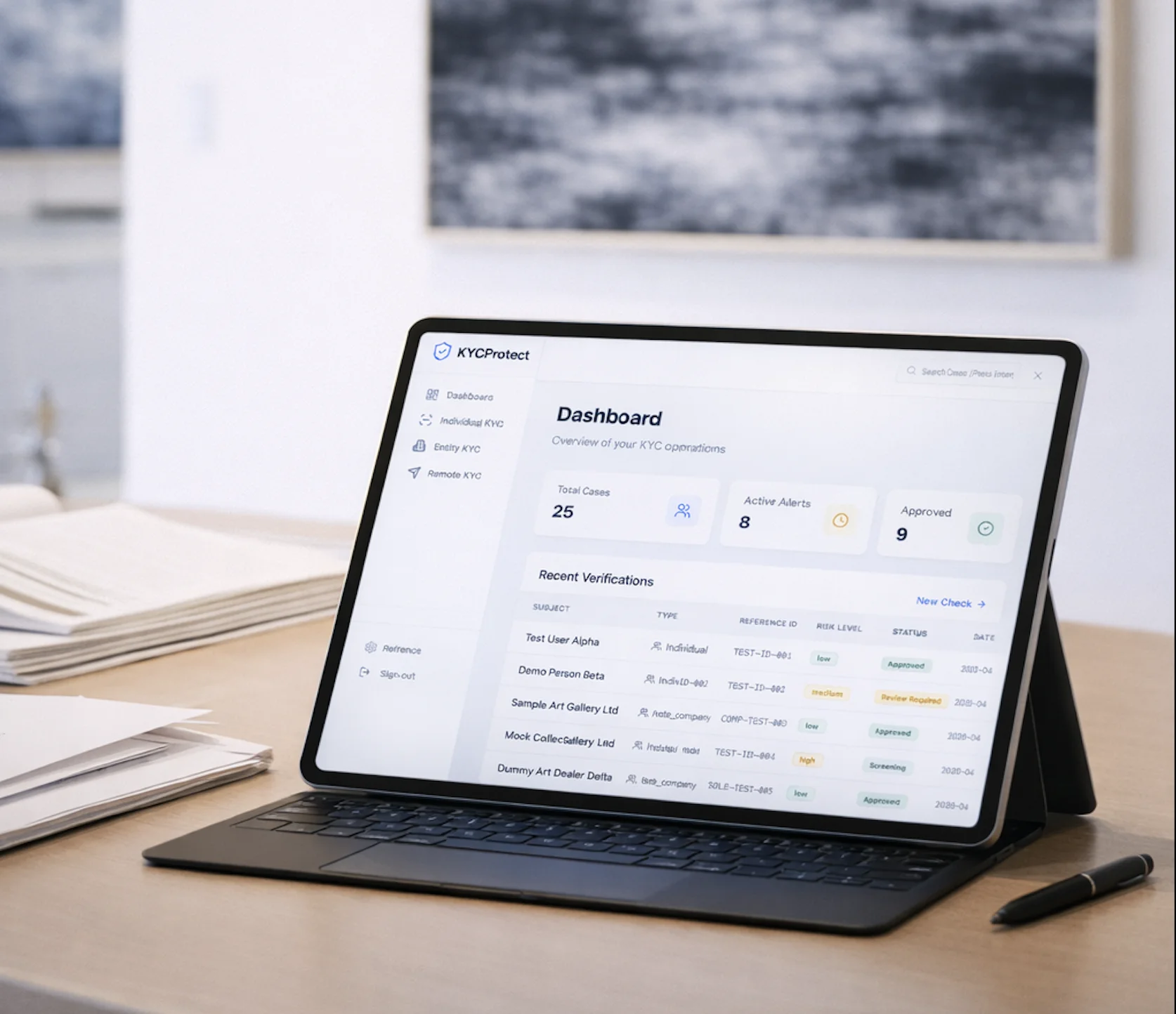
That creates a direct challenge to a large amount of legacy onboarding logic in the art market. If the current remote identity model is still heavily dependent on “upload your ID and take a selfie,” then it may continue to work as a basic friction-reduction tool, but it starts to look weak against an environment where eIDAS-certified, high-assurance credentials become increasingly realistic and relevant.
Why the Wallet Matters for the Art Market
The art market is a strong use case because it combines remote onboarding, cross-border clients, higher-value transactions, and the need for greater confidence in who the customer really is. Galleries do not simply need convenience. They need identity workflows that can survive future scrutiny, especially as AMLA’s standards on customer due diligence become more detailed.
The Assurance Gap
The real issue is assurance. A selfie-based process can help a business get some comfort that a person is presenting an identity document. But it does not automatically create the same level of confidence as a framework built around stronger identity trust, interoperability, and formal assurance tiers.
This matters because the market is moving toward a world where businesses can no longer pretend that all digital onboarding methods are broadly interchangeable. Once higher-assurance tools become more available, weaker methods look less like smart flexibility and more like tolerable compromise.
Why 2026 Is the Turning Point
2026 matters because this is the year when the Digital Identity Wallet stops feeling like a future initiative and becomes part of real planning. The implementing standards already create the foundation for wallets that are interoperable and accepted across the EU, such as set by KYC Protect. At the same time, AMLA’s customer due diligence work is pushing firms to think more seriously about the quality of the information and documents used in onboarding.
Put those two trends together and the direction is obvious: stronger digital identity confidence will matter more.
Key Terms
- **eIDAS 2.0:** The updated EU digital identity and trust services framework.
- **EU Digital Identity Wallet:** The EU-backed digital identity wallet to be offered by Member States by 2026.
- **Assurance Level:** The confidence tier attached to a digital identity method.
- **High Assurance:** The strongest level of identity confidence in formal frameworks.
- **RTS:** Regulatory Technical Standards.
- **AMLA:** The EU AML authority.
- **Interoperability:** The ability for systems and identities to work across member states consistently.